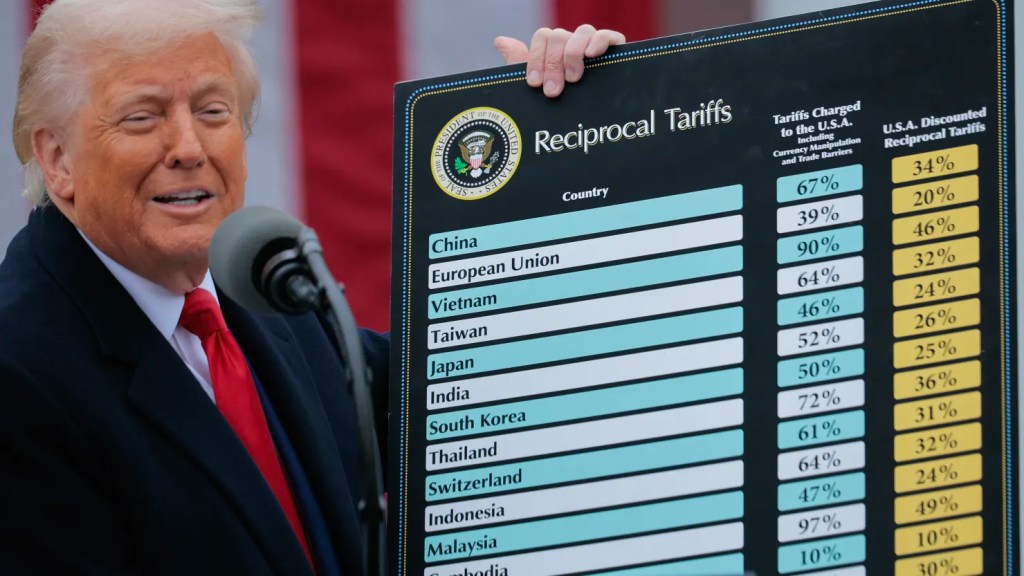
At the core of the U.S.–China tariff war lies a convergence of America’s “twin deficits”—trade and fiscal—and the broader strategic contest for global supremacy. While Trump publicly framed the tariffs as a corrective to unfair trade, the underlying fear was structural: China had already overtaken the U.S. as the world’s largest economy in purchasing power parity (PPP) terms.
Trump invoked the historical analogy of the Peloponnesian War—where a rising Athens provoked anxiety in the dominant Sparta—to suggest that America, like all hegemonic powers, must preemptively check the ascent of its challenger.
One of Trump’s main tactics has been a combination of reputation-based commitment and “burning the boats” strategy. By maintaining a no-compromise stance during the 2018–2019 tariff war and extracting concessions from China, Trump cultivated a reputation for unwavering resolve. In game theory terms, this strategy restricts one’s own future choices to force the opponent into accommodating behavior. By publicly limiting his own options—such as threatening a flat 10% tariff on all imports or explicitly excluding rollback possibilities—Trump signals to adversaries that retreat is not on the table.
This is further enhanced by “feint and strike” tactics—diverting the opponent’s attention through layered pressure. Alongside tariffs, Trump simultaneously pushes tech export controls, TikTok divestment demands, and military posture shifts, complicating China’s ability to negotiate on any one front. While tariffs create domestic economic pain, Trump has strategically leaked statements like “we might not raise tariffs beyond 125%,” maintaining ambiguity. Game theory warns that when threats become too predictable or their costs too visible, they lose credibility. Trump thus treads the line between intimidation and self-sabotage.
Historically, such asymmetric economic contests often escalate into open conflict. Britain’s opium trade reversal of Chinese trade surpluses, which led to war in the 19th century, is one such example. The first U.S.–China tariff war yielded short-term gains for Trump—agricultural exports, IP agreements, and symbolic victory—but ultimately affirmed that coercion invites long-term resistance. Today, China holds “hostages” in Apple’s supply chains, Tesla’s Gigafactories, and Walmart’s inventory—interdependencies that make mutual escalation highly destructive.
Viewed as a repeated game, this confrontation lacks a clear winner. Trump, facing the 2026 midterms, is under pressure to deliver quick results, while Xi Jinping operates with longer strategic patience. In a game of chicken, the player with a shorter time horizon is likelier to swerve first—but only if political blowback outweighs perceived gains. Moreover, Trump’s personal financial entanglements—including Trump Media and crypto ventures—raise concerns that tariff decisions may be driven as much by private profit as by public policy. In the long run, this dynamic risks producing a lose–lose outcome where both superpowers incur rising costs without a stable resolution.
 VAZ LLC